5 Pillars of Longevitality
Longevity is built upon conscious daily choices and sustainable habits that positively influence the functioning of the organism at the cellular level.
Longevitality is founded upon five essential pillars:
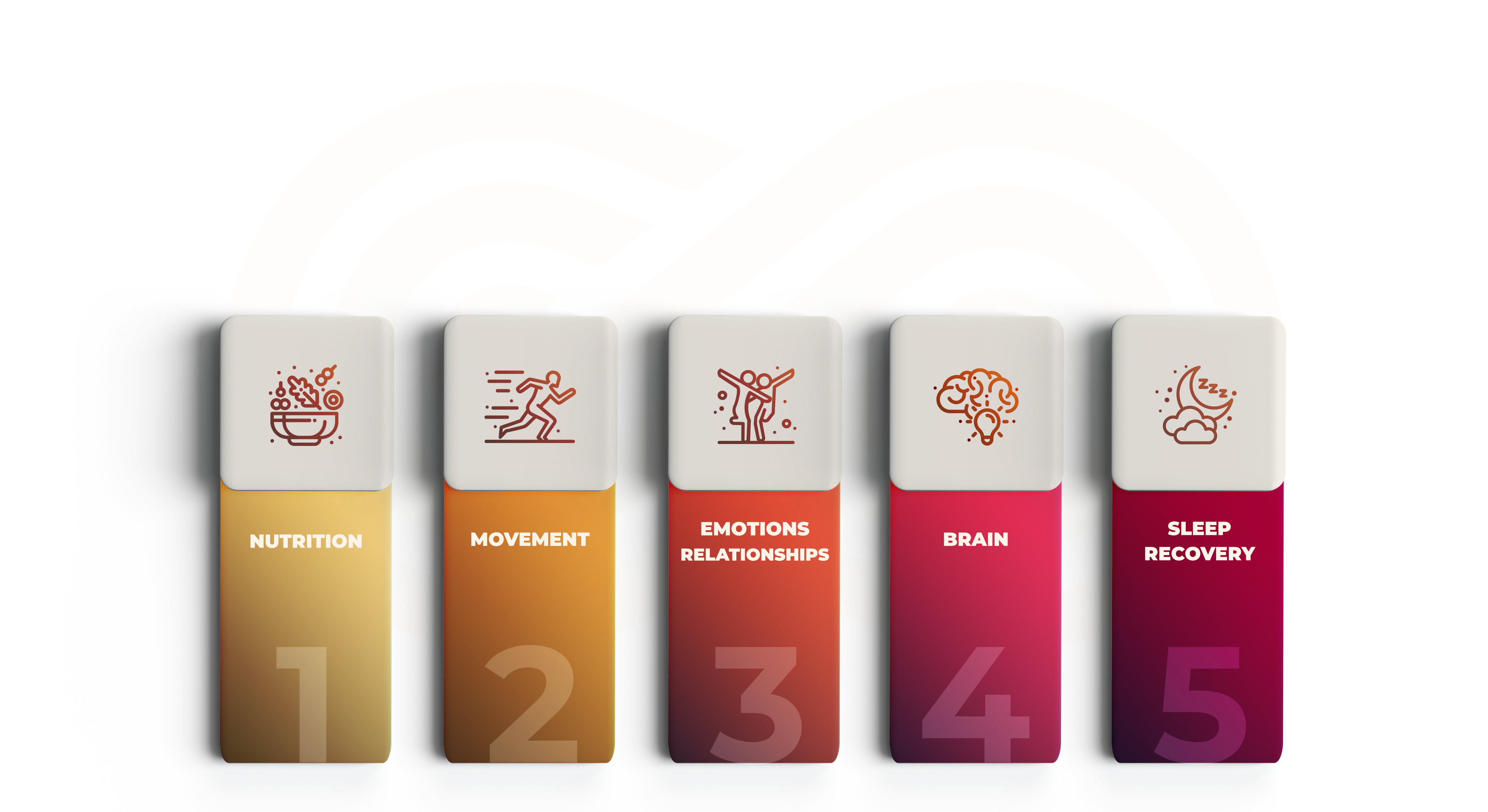
Each pillar targets different biological processes, yet only their mutual synergy creates an internal environment where the organism can thrive across decades.
1. Nutrition
Fuel for Every Day
Diet is one of the most powerful determinants of biological aging. The body remembers not just what we eat occasionally, but how we nourish ourselves consistently over the long term.
Every cell requires energy, structural building blocks, and protective mechanisms. Nutrition influences virtually every physiological process — metabolic efficiency, hormonal equilibrium, inflammatory signaling, recovery depth, immune resilience, and cognitive acuity.
Key priorities include sufficient dietary protein, healthy fatty acids, prebiotic fiber, essential micronutrients, and glycemic stability. Chronic spikes in glucose and insulin accelerate numerous pathways associated with biological aging.
Beyond dietary composition, meal regularity, ingredient purity, and mindful eating play crucial roles. In reality, healthy nutrition thrives on simplicity and sustainable consistency.
2. Movement
One of the Most Effective Anti-Aging Tools
The human body is engineered for movement. Yet modern life subtly drives us toward physical inactivity, which severely accelerates biological decline.
Without physical activity, the body progressively loses muscle mass, functional strength, stability, metabolic flexibility, and regenerative efficiency. Blood circulation slows, mitochondrial density diminishes, and cellular energy expenditure becomes inefficient.
Conversely, regular physical exercise reinforces cardiovascular health, insulin sensitivity, neurogenesis, and hormonal harmony. It also dramatically improves sleep quality, psychological resilience, and stress adaptation.
Today, the gold standard is combining resistance training with aerobic conditioning. Aerobic exercise strengthens cardiovascular health and metabolism, while resistance training preserves lean muscle mass — one of the strongest clinical predictors of healthy longevity.
3. Emotions and Relationships
Psychological Resilience as a Biological Need
Emotional wellness, meaningful relationships, and how we experience daily life exert profound effects on biological aging.
Humans are not isolated biological machines. The nervous system constantly evaluates whether we are safe or threatened. This physiological appraisal directly dictates hormonal balance, immune vigilance, sleep depth, and recovery rate.
Research consistently demonstrates that individuals with strong social bonds, supportive communities, and deep relationships enjoy significantly longer, healthier lives. Conversely, chronic loneliness, emotional isolation, and continuous psychological strain represent severe risk factors for premature biological aging.
Daily joy, a sense of contribution, and purpose — what the Japanese describe as ikigai (the reason to rise in the morning) — provide psychological anchor points that directly enhance biological resilience.
Emotions are concrete biochemical events. Chronic psychological stress surges cortisol, fuels systemic low-grade inflammation, and accelerates cellular senescence. Positive emotions, by contrast, stimulate parasympathetic restoration, immune vigor, and nervous system harmony.
4. Brain
The Most Powerful Anti-Aging Organ in the Body
The brain coordinates the entire organism. It orchestrates neuroendocrine cascades, autonomic balance, emotional equilibrium, decision-making, and adaptive capability.
A healthy brain demands stimulation just as muscles require resistance. Without active challenge, it loses neuroplasticity — the ability to forge new synaptic pathways — accelerating cognitive decline.
Mental engagement is a biological workout. Reading, mastering new skills, intellectual dialogue, creative endeavors, and novelty stimulate neurotrophic factors and preserve mental sharpness into advanced age.
Genuine curiosity keeps the neural network vibrant. A brain engaged in purposeful discovery simply has no time to grow old.
5. Sleep and Regeneration
Restoration Without Which the Body Cannot Thrive
Regeneration is frequently the most underestimated pillar of longevity. Yet it is during deep sleep that the body executes its most vital reparative and restorative operations.
While we sleep, tissues repair, hormones equilibrate, immunity strengthens, and the brain processes memories while clearing metabolic debris via the glymphatic system.
Rest is not wasted time or a sign of weakness. Chronic sleep deprivation has become a leading accelerant of premature biological aging.
Insufficient rest elevates systemic cortisol, drives chronic inflammation, disrupts metabolic homeostasis, impairs immune function, and compromises mental clarity and emotional stability.
Recovery is not the opposite of high performance; it is its prerequisite. Cultivating quality restorative sleep and downregulating the nervous system is an indispensable biological necessity.
The body does not demand perfection. It asks for stability, mindful care, and sustainable rhythm. Longevity is not about rigid asceticism or obsessing over every biomarker. It is about establishing healthy daily rituals that feel rewarding — because the goal is not only to add years to life, but to bring vibrant life to those years.